
Trust and safety standards for AI agents.
A nonprofit institute. AI must be human-centered before organizations will trust it with meaningful work. We convene leaders and professionals from industry, engineering, and research to define what that takes in practice, and publish it openly.
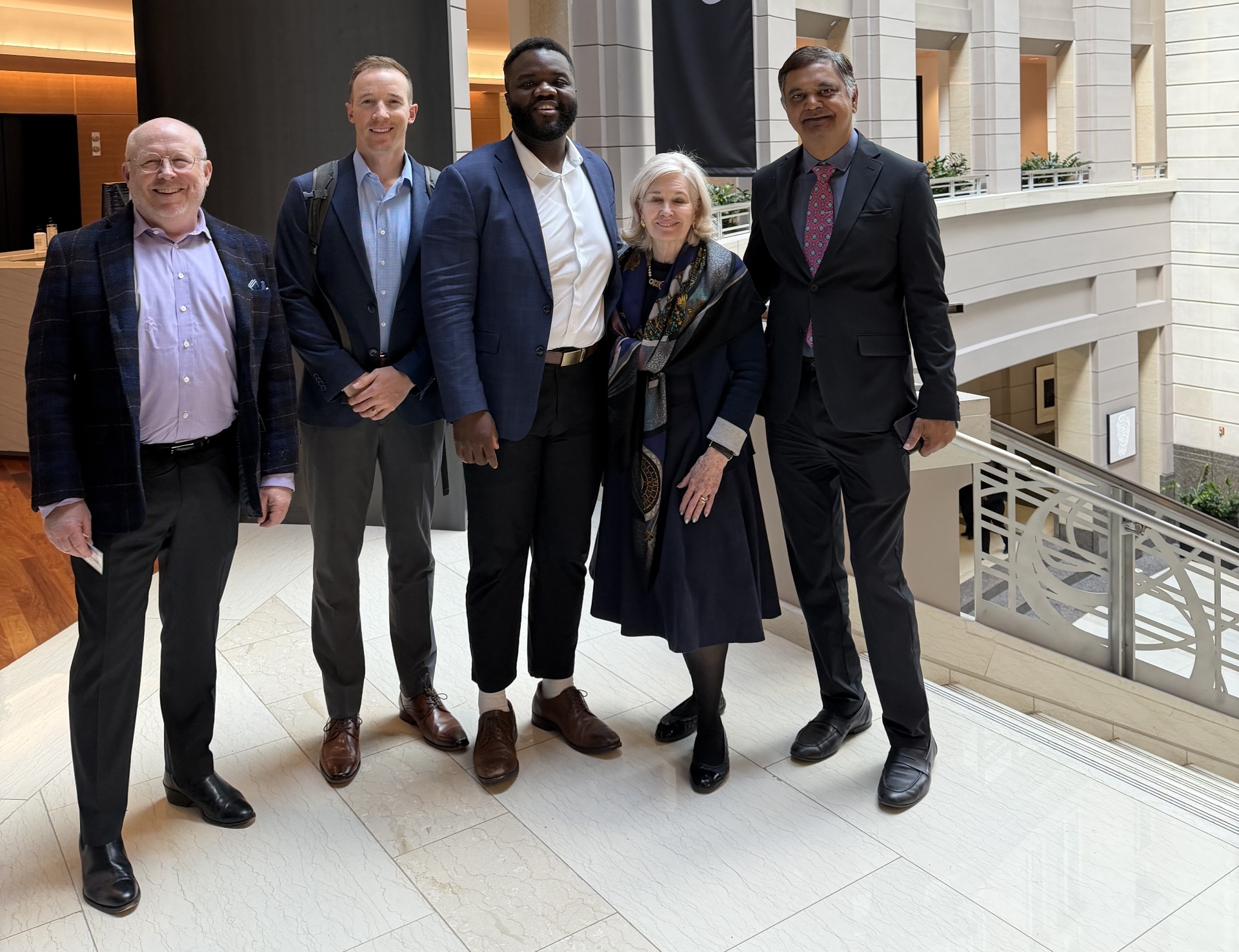
Convening at Gallup with the leaders building the standards.





People are deploying AI faster than they can govern it.
Agents that act on their own are already in production. Closing that gap is the problem we exist to solve.
Documented AI incidents, 2024 to 2025. A 55% rise in a single year.
Stanford HAI, 2026 AI Index Report, AI Incident Database ↗Hallucination rate across 26 benchmarked models. The best still fails one time in five.
Stanford HAI, 2026 AI Index Report ↗Of agentic AI projects will be scrapped. Inadequate risk controls, unclear value, costs that outpaced governance.
Gartner, 2025 ↗No company closes this gap alone. That is why we convene.
Convene. Agree. Publish.
AI brings scale. People bring judgment. Together they make collective intelligence, and it only works if it is built on trust.
Convene
We get the right people in one room: the executives who answer for it, the engineers who build it, and the researchers who can tell us whether it holds up.
Agree
They argue. We stay in the room until there's an answer you can check a real system against. Specific enough to be useful, open enough to be challenged.
Publish
We write it down and give it away. Free to read, free to use, free to build on, because a standard everyone can reach is the only kind that works.
Our first standard is the Collective Intelligence Trust Stack.
Trust isn't a policy. It's seven controls.
Seven controls, each one a question your system either answers or it doesn't. Find yourself on it, measure your maturity, use it as a roadmap.
Seven questions. Ask them about your own system and you'll find your gaps before anyone else does.
None of this is finished. Your seat is open.
What the field is already saying.
Talks, papers, and specs from the people doing this work. We read them all and kept the ones worth your time.
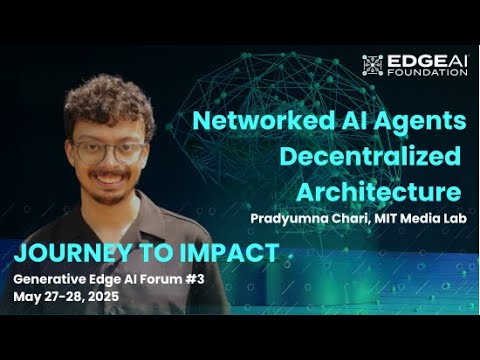
- VIDEOHow the MIT Media Lab Is Building a Web of AI Agents — Project NANDA ExplainedMIT Media Lab / Project NANDA · Jul 2025
Makes the case for why agents need verifiable identity at all — what breaks in a world of billions of agents with no equivalent of DNS for trust.
- TALKDEF CON 32 — Taming the Beast: Inside the Llama 3 Red Team ProcessMeta AI Red Team · Grattafiori, Evtimov, Bitton · Aug 2024
A frontier lab's own team walking through why red-teaming exists and how testing before release changes what ships.
- TALKStanford Seminar — How Can Privacy Exist in a Data-Driven World?Stanford University · Blase Ur (University of Chicago) · May 2024
Addresses the underlying tension this layer is built around — how privacy can survive systems that are structurally hungry for data.
- TALKHuman-Centered Explainable AI (XAI): From Algorithms to User ExperiencesVera Liao · Microsoft Research Montréal · Feb 2023
Ties directly to the HCXAI research already in the article library — explains why an explanation only counts if the human receiving it can actually use it.
- FRAMEWORKIntroduction to the NIST AI Risk Management Framework (AI RMF 1.0) — ExplainerNIST (National Institute of Standards and Technology) · Jan 2023
NIST's own explainer for the framework underpinning this layer — makes the case for why trustworthiness has to be designed in from the start, not bolted on.

The best standards are written by the people who use them.
Groups are forming around each control. Chairs are open.